There are growing indications that US airstrikes killed and injured dozens of Russian military contractors in northern Syria earlier this month.
But in stark contrast to the death of a Russian pilot shot down by
rebels in Syria In January, when the airman was hailed as a hero by the
Defense Ministry, Moscow appears to wish this story would go away.
The
Kremlin has downplayed reports of mass casualties, not named any of
those who died and not said why they were there in the first place.
But
families of the dead men are starting to ask questions. And details of
just why the mercenaries were in the oil-rich region -- and the target
of their ill-fated operation -- are starting to emerge.
On
the night of February 7, a 500-strong force largely made up of the
Russian contractors and a Christian militia loyal to the Syrian regime
crossed the River Euphrates near Deir Ezzor, a Syrian city held by ISIS until the end of last year.
The
Russians were working for a paramilitary company called Wagner, which
has hundreds of contractors on the ground in Syria, helping both the
Russian military and pro-regime forces.
The
mission of that night's operation remains unclear, but the forces were
advancing towards a valuable oil and gas field, Coneco, controlled by
the Syrian Democratic Forces (SDF), a US-backed militia that has been
fighting ISIS in Syria.
When the
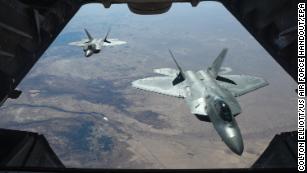
pro-regime forces began shelling a base held by the SDF, the US
responded with heavy airstrikes and artillery fire, which continued for
about three hours.
US commanders
tried to reach their Russian counterparts through what are known as
deconfliction channels, to warn of their response. But by the time
communications were established, the counterattack was underway.
Scenes of carnage
The
results were devastating. The accounts of several of the Wagner
contingent, as relayed to friends and family, speak of carnage as US
commanders deployed AC-130 attack aircraft, helicopters and artillery in
response to the attack.
Valery
Shebayev, who visited some of the injured in a Moscow hospital, told CNN
the group had been ordered to take what was described as a vacant oil
field. But they had no air support. Shebayev, who belongs to a Cossack
group from which Wagner draws some of its recruits, described what
followed as "a massacre."
Ruslan
Leviev, an activist with the Conflict Intelligence Team in Moscow, a
group that monitors Russian involvement in Syria, told CNN that while
estimates of the number of varies, "we lean towards 20 to 30 of dead
Russian citizens."
The Russian
government has declined to confirm the reports. On Thursday, Foreign
Ministry spokeswoman Maria Zakharova would only concede that five
Russian citizens may have been killed.
Pressed
by CNN about reports of a much higher casualty figure, Kremlin
spokesman Dmitri Peskov tried to draw a line under the story on Friday.
"We have no new information about this and we said everything we wanted
to say on this matter," he said.
Deadly encounter between US and Russia
This
low-key response to contractors' deaths is not unusual: Moscow prefers
to portray its involvement in Syria as largely an air war with few boots
on the ground.
But if the upper
end of the casualty figures is confirmed, it would be the deadliest
encounter between the US and Russia since the end of the Cold War. For
its part, the US says it followed the deconfliction protocols. "The
Russians professed that they were not aware when we called them about
that force that had crossed [the Euphrates]. As it came closer they were
notified when the firing began," US Defense Secretary James Mattis said on February 11.
Among
the families of the men who died, there is growing anger. Farkhanur
Gavrilova, 67, from the central Russian village of Kedrovoye, lost her
son, Ruslan. She only learned of his death from an acquaintance, with no
official word from Wagner or the Russian authorities.
Gavrilova contrasted the fate of the Wagner men with state media coverage of Roman Filipov,
the pilot shot down by rebels in Syria last month. "Are they not people
too? They obviously went to fight, to help, even if it's for the money
it's because of poverty, because there are no jobs," Gavrilova told an
online private network, Current Time.
Another
of the dead was 51-year-old Vladimir Loginov. Like many contractors who
have gone to Syria, he was a member of a Cossack group of
ultra-nationalists who had also fought in the conflict in eastern
Ukraine. The Baltic Cossack District said in a statement that Loginov
was a Russian citizen who was killed in an "unequal battle."
The
pro-Assad Christian militia that was also involved in the attack
appears to have suffered heavy losses. Earlier this week, there was a
mass funeral for about 30 members of the militia -- which often
describes itself as the "ISIS hunters."
Oil and money
The question remains why such a large force should have attempted such a dangerous -- and disastrous -- assault.
Leviev
believes the attack on the SDF-held base was a terrible miscalculation,
born out of a belief that the attention of the anti-regime forces, many
of whom are Kurdish, would have been focused on an ongoing operation by Turkish forces against the Kurds around Afrin in northwest Syria.
"The
pro-Assad forces thought the Kurds were distracted by what's happening
in Afrin, so [used] the opportunity and try to take control of the
Coneco oil and gas factory. It looks like it was an independent
initiative."
But why would Wagner take such a risk to take control of the oil field?
Wagner
is led by Dmitry Utkin, a former colonel in the Russian special forces
who is under US sanctions for assisting pro-Russian separatists in the
conflict in eastern Ukraine.
Utkin
was once head of security for a Russian oligarch called Yevgeny
Prigozhin, who has close ties to the Kremlin. Prigozhin was indicted by US Special Counsel Robert Mueller
on Friday for funding the Internet Research Agency, a Kremlin-linked
troll group accused of interfering in the 2016 US presidential election
campaign by sowing discord online.
Prigozhin
controls a network of Russian companies, including Concord Management
and Consulting. Company records show that someone named Dmitry Utkin,
the same name as the Wagner boss, is director general of Concord.
Prigozhin
and Concord have denied being linked to Wagner. Concord said last year:
"We do not have any information about this organization."
Last month, the US Treasury Department designated another Russian company, Evro Polis, "for being owned or controlled by Yevgeny Prigozhin."
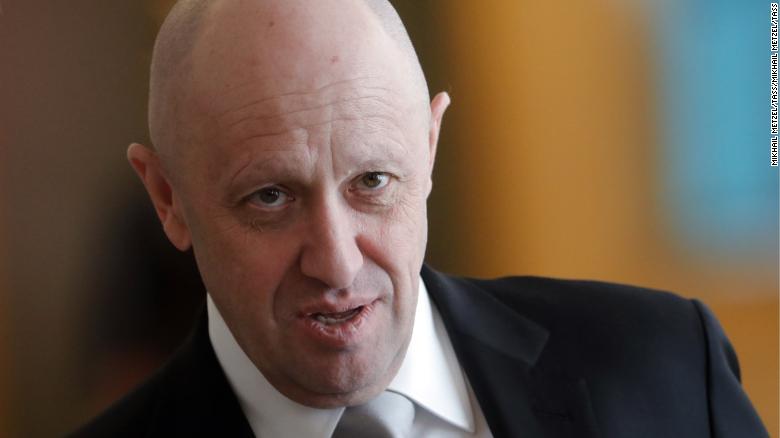
Yevgeny Prigozhin, a Russian oligarch who controls a network of companies including Concord.
CNN
has seen a copy of a contract between Evro Polis, and the Syrian
regime, under which Evro Polis gets 25% of oil revenues from fields that
are recovered from rebel control.
"It
seems that on some level all Prigozhin's financial assets overlap and
he uses the money from them to fund projects like the troll factory,
Wagner, Evro Polis and others," Ruslan Leviev, the activist, says.
Essentially,
Wagner does the fighting; Evro Polis gets the oil and gas. Coneco, the
oil field near Deir Ezzor, is one of the most valuable still in rebel
hands.
Efforts to reach Wagner, which has no registered office in Russia, were unsuccessful.
Despite
the Kremlin's reticence, and the total silence in Russia's official
media, the deaths in Syria are showing signs of impacting the election
campaign in Russia, in which President Vladimir Putin is bidding for
another six years in office. The vote is on March 18.
On
Monday, liberal presidential candidate Grigory Yavlinsky said: "If
massive Russian casualties took place, then relevant officials... must
announce this to the country and find out who is responsible."
So far, there is no indication that Russian authorities have any enthusiasm to do either.
Comments
Post a Comment